
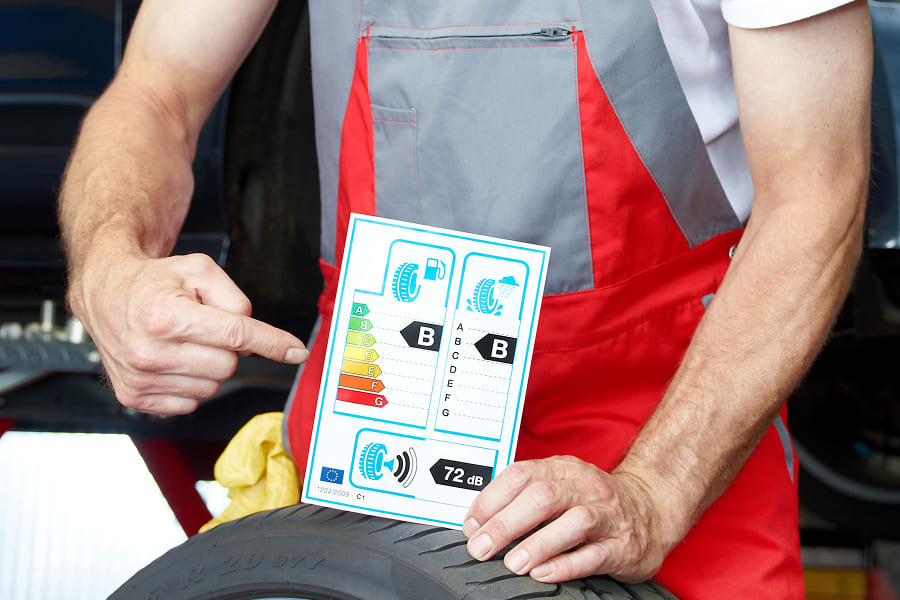
The vehicle label is an official information label for new vehicles that contains information on fuel consumption, CO₂ emissions and efficiency class. It provides transparency and helps companies and private individuals to better compare vehicles in terms of their environmental and operating costs. In fleet management, the vehicle label plays an important role in strategic vehicle selection.
What information does the vehicle label contain?
The vehicle label is based on the WLTP measurement values and provides information on, among other things
- Fuel consumption or power consumption
- CO₂ emissions
- CO₂ class
- Energy costs per year
- Comparative values within the vehicle class
For electric vehicles, additional information is provided on the electric range and power consumption.
Significance for the vehicle fleet
For companies, the vehicle label is more than just mandatory information. It provides support for:
- the selection of economical vehicles
- the reduction of CO₂ emissions
- the achievement of internal sustainability targets
- the calculation of operating costs
- compliance with legal requirements
For larger fleets in particular, the label helps to systematically evaluate vehicles according to their efficiency and environmental impact.
Influence on costs and sustainability
Vehicles with low CO₂ values often benefit from tax advantages or lower levies. At the same time, lower consumption reduces ongoing operating costs.
As part of an electrification strategy, the vehicle label serves as an objective basis for decision-making in order to identify suitable models.
Conclusion
The vehicle label creates transparency in terms of consumption and emissions and supports companies in sustainable and economical fleet planning. Anyone who selects vehicles strategically should integrate the information provided by the label into their decision-making processes.
