
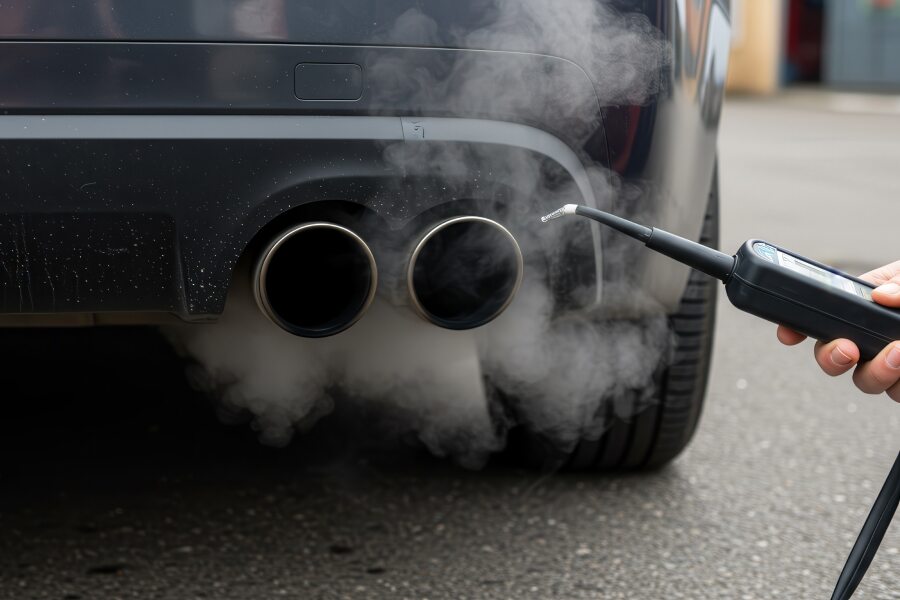
The exhaust emissions test, or AU for short, is a legally prescribed test of the exhaust emissions of motor vehicles. It serves to ensure that vehicles comply with the applicable environmental regulations and do not emit excessive pollutants. In fleet management, the emissions test is an important part of regular vehicle inspections and contributes to compliance with legal requirements and a sustainable vehicle fleet.
What is tested during the emissions test?
The emissions test checks whether the vehicle complies with the permissible emission values . Among other things, the following points are checked:
- Function of the exhaust gas purification system
- Pollutant levels in exhaust gas
- Condition of catalytic converter or particulate filter
- Engine control and exhaust control
- On-board diagnostic systems of modern vehicles
The test is carried out using special measuring devices that analyze the concentration of pollutants in the exhaust gas.
Connection with the main inspection
Today, the exhaust emissions test is usually part of the main inspection (HU). Both tests are often carried out and documented at the same time. After a successful inspection, the vehicle receives the corresponding inspection sticker.
Importance in fleet management
For companies with their own vehicle fleet, regular emissions tests are mandatory. If a vehicle is operated with exceeded emission values or the test deadline is missed, fines or restrictions on the operating license may be imposed.
Structured fleet management ensures that:
- Inspection dates are planned in good time
- Vehicles remain in perfect technical condition
- legal environmental requirements are met
Digital deadline monitoring is particularly helpful for large fleets in order to reliably meet deadlines.
Environmental and sustainability aspects
The emissions test helps to improve air quality and reduce the environmental impact of vehicles. Companies that modernize their fleet or switch to lower-emission drives can meet the requirements of the emissions test more easily and strengthen their sustainability strategy at the same time.
Conclusion
The emissions test is a central component of vehicle monitoring and is closely linked to the main inspection. For vehicle fleets, it ensures that vehicles meet legal emission requirements and are operated in an environmentally friendly manner. Careful planning and regular maintenance help to avoid problems during the test and keep the fleet reliably ready for use.
