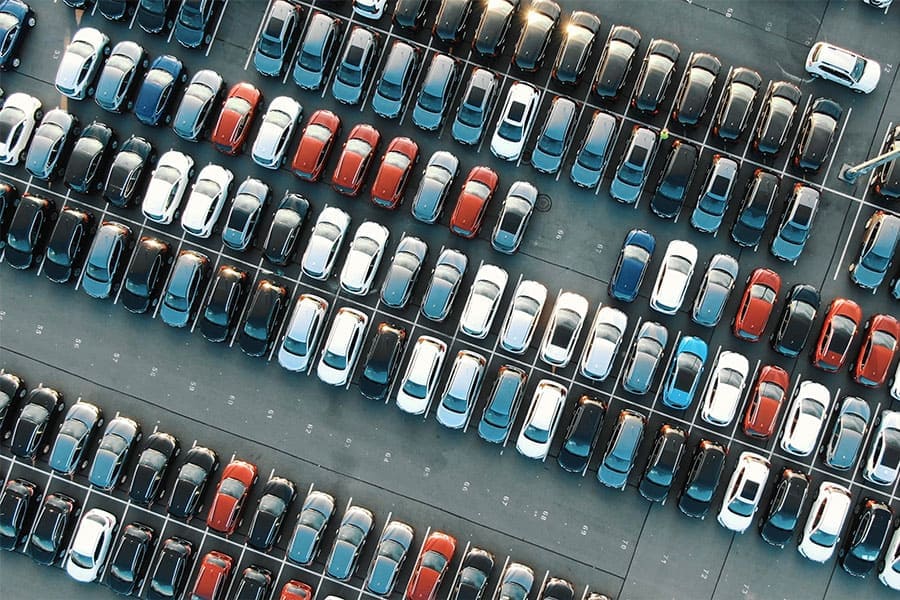
Today, a professionally organized fleet is far more than just a collection of vehicles. With an increasing number of drivers, a growing fleet and increasing requirements, the establishment of a clearly structured fleet organization is becoming the decisive basis for efficiency, safety and profitability.
Companies are faced with the challenge of not only organizing their fleet management, but also aligning it strategically. This is precisely where modern fleet management comes in: it combines operational processes with data-based decisions and creates the basis for a sustainably managed vehicle fleet.
Contents
Why a structured fleet organization is crucial
In many companies, the vehicle fleet has grown historically. Processes have been built up over the years without being clearly defined. As long as only a few vehicles are in use, this often still works.
However, as the fleet grows, typical challenges arise: a lack of transparency, increasing administrative costs and inefficient processes. Information is scattered, responsibilities are not clearly defined and important decisions are often made on an incomplete data basis.
A structured organization provides clarity here. It creates the basis for standardizing processes, reducing risks and managing the entire fleet in a targeted manner.

Minimize your fleet costs with our fleet management software
The most important building blocks in setting up a fleet organization
Create clear responsibilities
A functioning fleet needs centralized control. In practice, this role is assumed by a fleet manager who coordinates both operational and strategic tasks.
Modern fleet management is no longer just about organization, but also about control. The fleet manager makes decisions based on data, prioritizes measures and ensures that everyone involved – from the drivers to the management – works according to clear structures. This role is particularly important for growing fleets in order to reduce complexity and manage processes properly.
Define and standardize processes
Efficient organization in fleet management does not happen by chance, but through clearly defined processes. Without fixed processes, frictional losses, unnecessary coordination and errors quickly arise.
Typical core areas are
- Deployment and distribution of vehicles
- Maintenance and repair planning
- Claims management and documentation
However, the existence of these processes is less important than their consistent application in everyday life. A truly efficiently organized fleet can only be created when processes are applied consistently.
Integrate legal requirements
In addition to operational issues, compliance with legal requirements plays a central role. In particular, regular driver’s license checks are an integral part of every fleet organization. It is not just a formality, but necessary in order to avoid liability risks and ensure safety within the company.
UVV driver training and technical inspections of the vehicles are also part of the fleet’s duties. Companies that integrate these topics into their processes in a structured manner create a stable and legally compliant basis for their entire fleet management.

Digitalization as the key to modern fleet management
The requirements in fleet management are constantly increasing. At the same time, the amount of data that needs to be processed and evaluated is growing.
Digital solutions offer a clear advantage here: organizations that use modern technologies in fleet management increase their productivity by an average of 15% (source: Gitnux, 2024).
This clearly shows that digitalization not only simplifies processes, but also has a measurable impact on the performance of the entire fleet.
From manual processes to digital fleet organization
Many companies still work with Excel lists or individual stand-alone solutions. This approach quickly reaches its limits, especially with a growing vehicle fleet.
The consequences are evident in everyday life: data has to be maintained multiple times, information is not centrally available and decisions are made more difficult.
Modern fleet management software can help here. It bundles all relevant information in one place and ensures that processes are mapped consistently and transparently. The use of such systems is therefore increasingly becoming a prerequisite for fleet management – simply because it is necessary in the long term to ensure efficiency and control.

Fleet+ fleet software
With our powerful fleet management software Fleet+, you can control your company’s fleet digitally, cost-effectively and transparently.
Digital fleet organization with Carano Fleet+
Fleet+ from Carano provides companies with specialized fleet software that actively supports the development of a structured organization.
Instead of looking at individual processes in isolation, all areas of the fleet are linked together: from vehicle management and deadline monitoring to cost and usage analysis. This creates an integrated system that simplifies processes and at the same time creates the basis for well-founded decisions.
For fleet managers, this means a noticeable reduction in the daily workload. Routine tasks are automated, information is available at all times and the entire fleet can be managed much more efficiently.
Rethinking sustainability and mobility
In addition to efficiency, the topic of sustainability is also becoming increasingly important. Companies need to realign their mobility and combine economic and ecological aspects.
Structured fleet management makes exactly that possible. It creates transparency regarding the use of vehicles, helps to identify optimization potential and helps to reduce unnecessary journeys or resource consumption.
In this way, the fleet is not only organized, but actively developed.
Discover how Carano can also ensure clear structures and secure documentation in your company.
Conclusion: structure as a success factor in the fleet
- A clearly structured fleet organization with defined responsibilities, standardized processes and integrated legal obligations forms the basis for economical and safe fleet management.
- Centralized data, clear workflows and standardized processes are the only way to reduce costs, make well-founded decisions and manage the fleet in a targeted manner.
- With Fleet+ from Carano, fleet processes can be automated, costs analyzed and mobility strategically developed - for an efficiently managed and future-proof fleet.
Frequently asked questions
A clear structure is required in order to standardize processes, minimize risks and manage the fleet efficiently.
The fleet manager coordinates the entire fleet, controls processes and ensures that all fleet management requirements are met.
Fleet software bundles data, automates processes and ensures transparent and efficient fleet management.
Responsibility for the vehicle fleet usually lies with the company or the management. Operationally, fleet management is usually transferred to a fleet manager or a responsible specialist department, which takes care of administration, organization and compliance with all specifications.
Structured fleet management ensures that vehicles are used efficiently, costs are controlled and legal requirements are met. Without clear organization, unnecessary costs, risks and inefficient processes quickly arise.
Fleet management refers to the organization, control and administration of all of a company’s vehicles. This includes procurement, maintenance, cost control and the coordination of drivers and processes throughout the fleet.
Fleet management software helps companies to centrally manage all vehicle and driver data. It automates processes such as appointment monitoring, maintenance and driver’s license checks, ensures greater transparency and facilitates compliance with legal requirements in the fleet.
Further contributions
Claims management: How to handle damage to your fleet professionally
Fleet safety: How to minimize the risk of accidents
Safety and transparency in the vehicle fleet: why a company car policy is essential
Fleet Management: Basics, Legal Requirements and Tasks
Fleet insurance: cover for your vehicle fleet
The 5 advantages of fleet management software for your company
Fleet management tasks: The 10 most important fleet activities
10 Tips for Successful and Efficient Fleet Management
Mobility Budget Instead of Company Car: Flexible Mobility for Employees
Bicycles in the company: A sustainable alternative for employee mobility
E-mobility in the Company: 5 Important Points of the Fleet Analysis
Driver instruction according to UVV: Download template as PDF
Fuel cards for companies: Efficient management of fuel costs in the fleet
Bicycles in the company: A sustainable alternative for employee mobility
Fleet Management: Modern vehicle management for maximum fleet efficiency
Car Policy: Significance and advantages of a company car policy in the vehicle fleet
Fleet optimization – efficiency and digitalization in modern fleet management
Vehicle management: efficient processes for a modern vehicle fleet
Excel fleet management: a practical start or an outdated concept?
Fleet management: How to manage your fleet successfully
Claims management software: How fleets benefit from digitalization
Sustainable mobility starts with the vehicle fleet: electrification & environmental measures
Owner liability in the fleet: These obligations apply to fleet managers
Fleet management system: Efficient management of modern vehicle fleets
Sustainable fleet management: strategies, processes and control for sustainable companies